IP-SAN Storage Servers
Purpose-built storage servers for shared block storage, iSCSI targets, virtualization clusters, backup repositories, and business-critical workloads.
IP-SAN.com designs, builds, and supplies IP-based SAN storage servers for businesses that need shared storage, backup storage, virtualization storage, video storage, disaster recovery, and remote storage access.
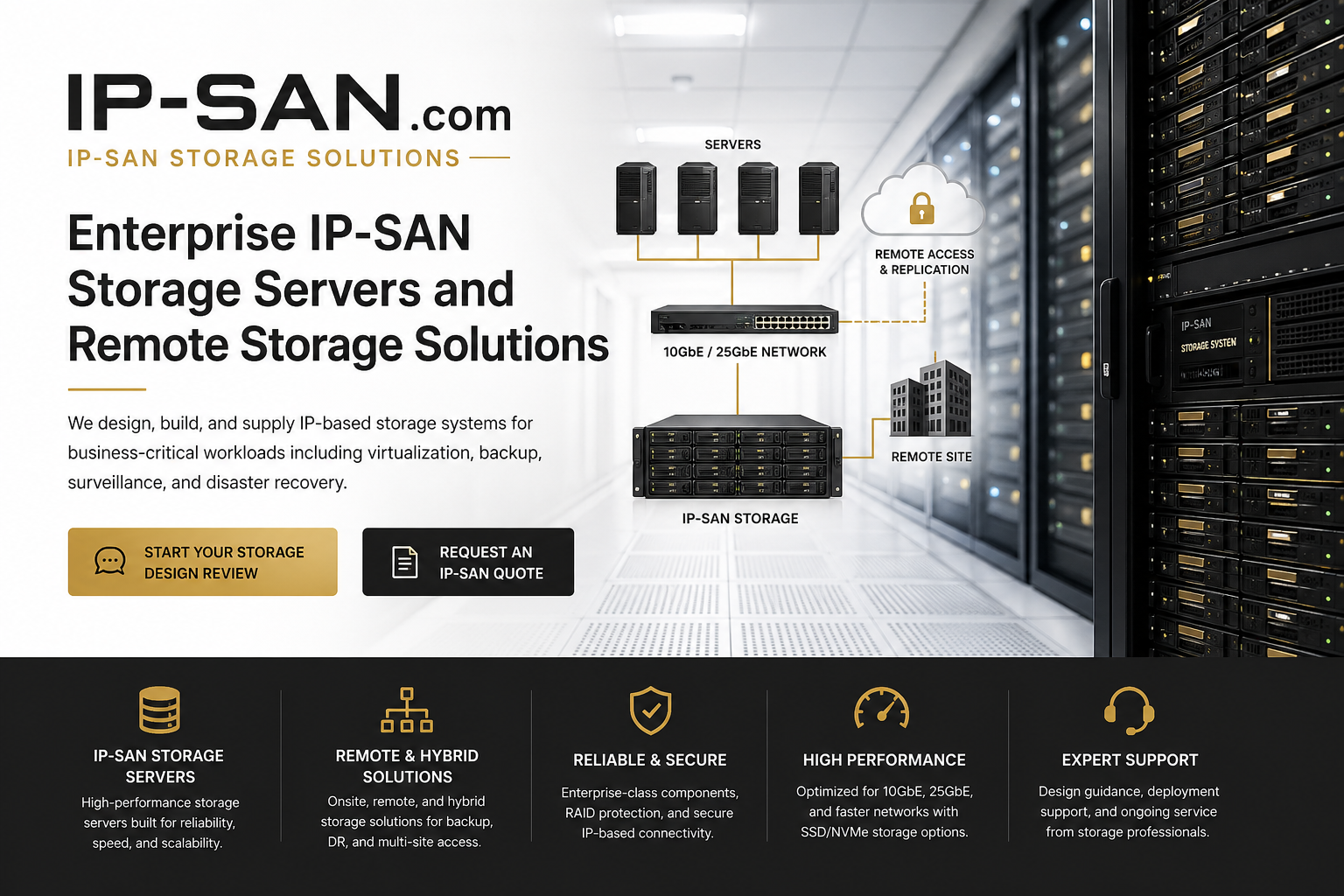
IP-SAN.com is not just an information site. We provide real storage hardware, server platforms, RAID systems, SSD/NVMe storage, networking guidance, and deployment support for businesses that need reliable shared storage.
Purpose-built storage servers for shared block storage, iSCSI targets, virtualization clusters, backup repositories, and business-critical workloads.
Remote backup targets, offsite retention, replication-ready storage, VPN-connected storage access, and hybrid onsite/offsite designs.
Architecture support covering RAID layout, drive selection, network speed, controller choice, capacity planning, and growth strategy.
Good storage design starts with how the customer actually uses the system. A backup target, video surveillance recorder, VM datastore, and database storage platform should not all be designed the same way.
Shared storage for multiple hosts, lab environments, production clusters, and VM workloads that need reliable centralized storage.
Storage targets for local backup, offsite replication, bare metal recovery planning, retention, and disaster recovery workflows.
Capacity-focused systems for video recording, retention planning, high-write workloads, and expandable storage architectures.
Tell us what you are trying to store, how many systems need access, how fast the storage needs to be, and whether it needs to stay onsite, remote, or both.
We can help customers plan storage systems that stay onsite, operate at a remote location, or combine local storage with offsite backup and replication strategy.
Storage failures are often design failures. The right conversation before purchase can prevent undersized capacity, poor RAID choices, network bottlenecks, and unreliable recovery plans.
See Design Approach